Page contents
How do the shapes of a surfboard determine its behaviour?
A surfboard gives the surfer three things: lift (buoyancy at low speed, planing at high speed), acceleration (paddling, gravity, pumping, carved turns) and manoeuvrability (pitch, roll, yaw). Three actors are enough to guess its lines: the outline (length, width, wide-point position, nose and tail widths), the rocker (the curve of the bottom) and the fins. Every improvement has its counterpart: buoyancy adds weight, rocker adds braking, width makes the rails harder to bury. There is no perfect board, only boards suited to a style and to conditions; understanding these shapes helps you choose well, from the board to the fins.
Lift: buoyancy and planing
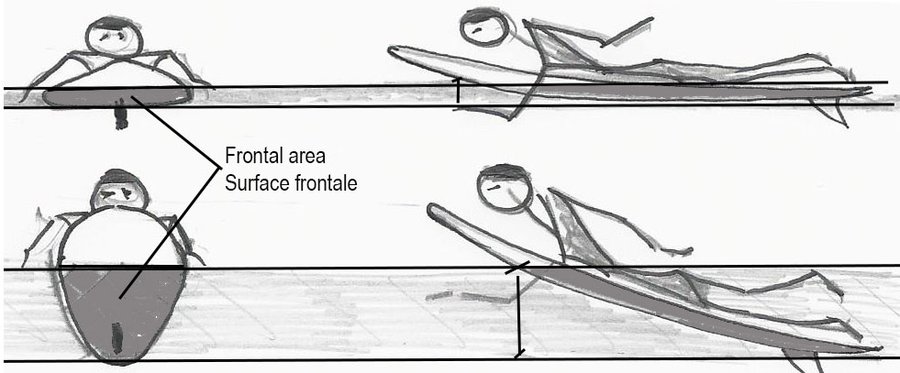
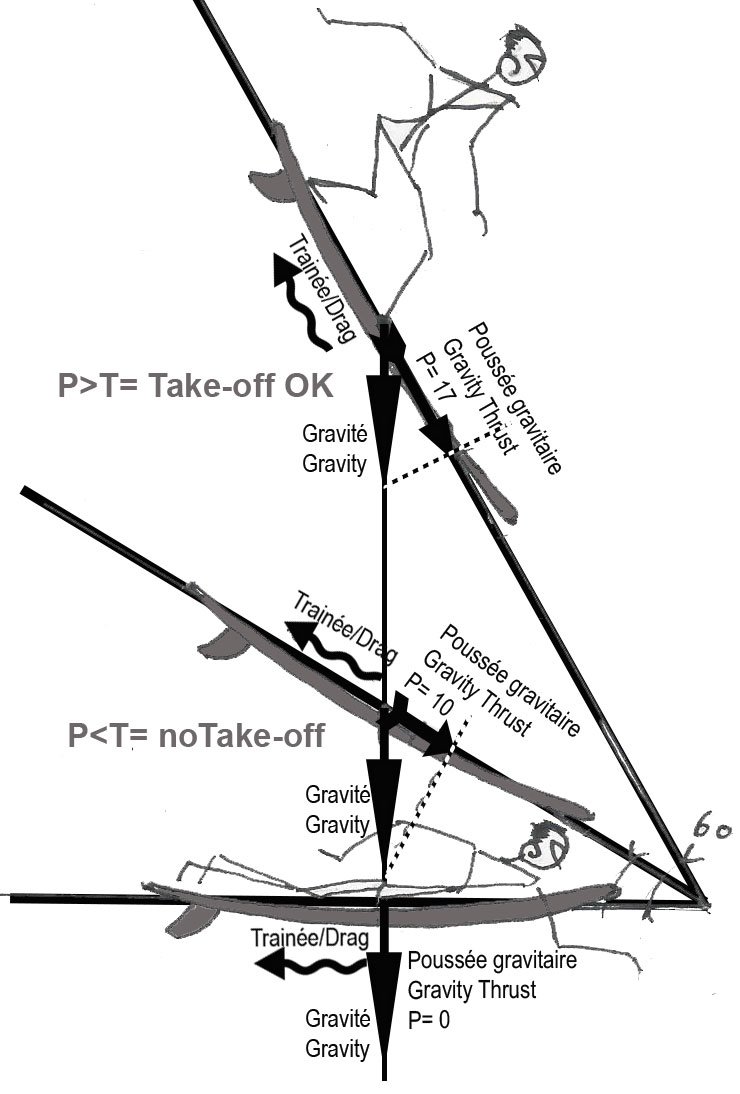
Buoyancy comes from volume (Archimedes: 1 litre immersed carries 1 kg). It keeps the surfer out of the water when paddling and in slow manoeuvres; a lot of volume (longboard) makes paddling easy but forbids the duck dive. Planing appears with speed: the water pressure on the bottom creates a lift proportional to area, angle and the square of speed. The take-off marks the switch from one mode to the other, but the surfer keeps oscillating between the two.
Acceleration and drive
Four sources of acceleration: paddle strokes, gravity (planing down the wave face with the rails and fins), propulsive lateral movements (pumping) and carved turns combined with the speed of the swell (bottom turn). Drive is the ability to generate acceleration with a part of the board: the rail, which planes in the rising flow of the face when immersed, and the fins, which behave like gliders when their camber and angle are right and tilt lift forward. This effect only exists if the fin is well oriented: that is the point of dynamic fins.
Manoeuvrability: pitch, roll and yaw
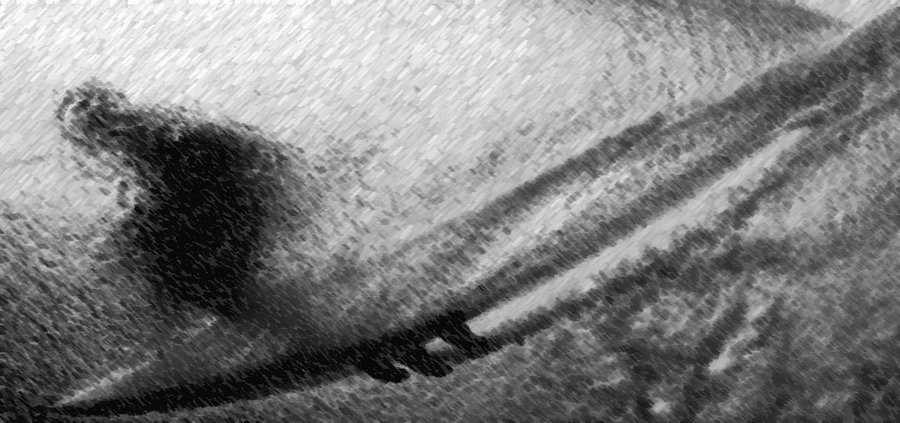
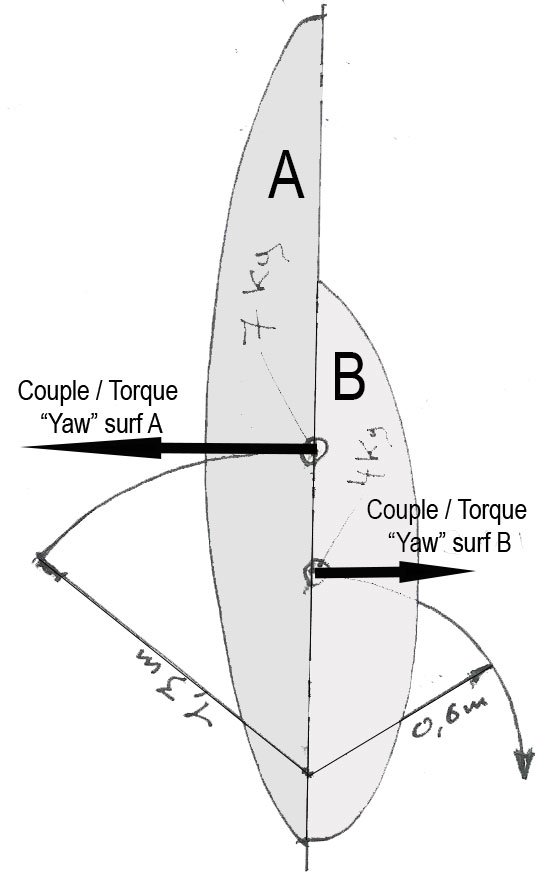
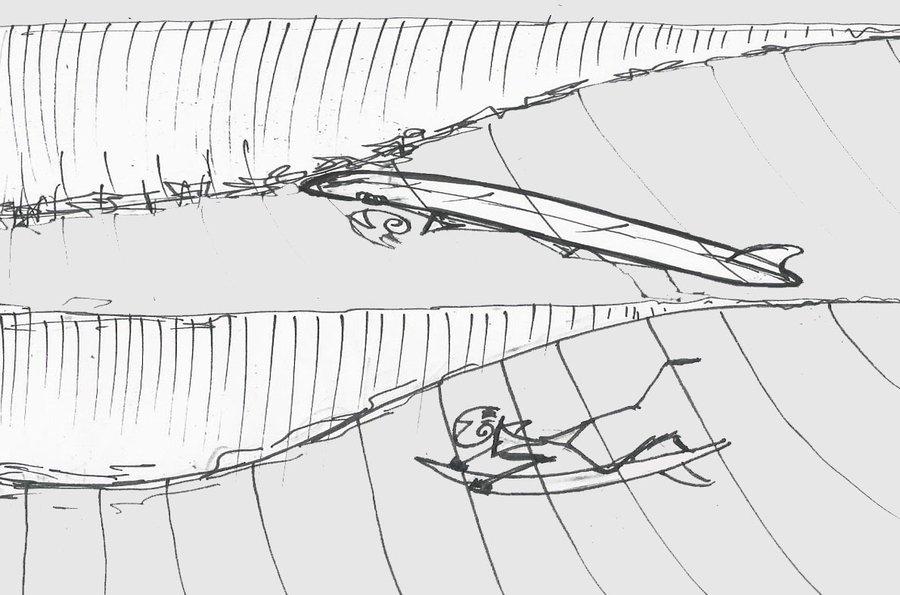
Roll buries the rail and engraves the rocker curve in the wave; width slows it. Pitch accelerates or brakes by tilting the board; the distribution of the outline and the flat zone of the rocker govern it. Yaw turns the board around the vertical axis: on the back foot (tic-tac style, 1980s) or around the spine (skate/snake/longboard style, 2010s), a style rediscovered with the alaia, finless boards and the drive of dynamic fins.
The torque needed to turn depends on mass and on the distance between the centre of inertia and the pivot: a 7 kg board with its centre of inertia at 1.3 m needs 91 N·m, a 4 kg board at 0.6 m needs 24; with a front foot 0.5 m from the pivot, 4.5 kg against 1.2 kg of force. Moving the pivot forward, by moving the fins forward or with fins that steer themselves, reduces this torque.
The outline: length, width and wide point
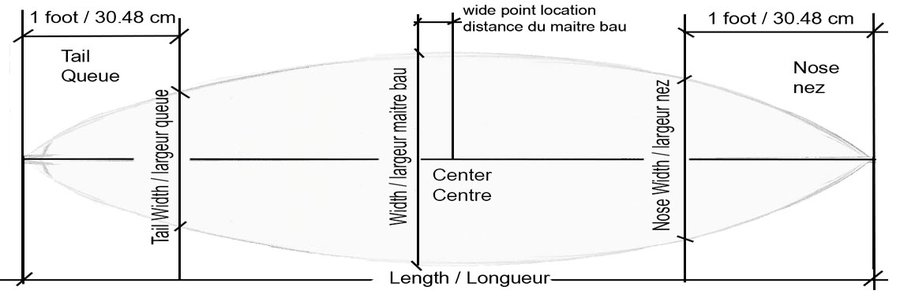
The outline is defined by the length, the maximum width (wide point) and its position, and the nose and tail widths taken one foot (30.48 cm) from the ends. Its area makes the buoyancy volume and, when paddling, form drag depends on the immersed frontal area.
- Length: buoyancy and paddling speed with less frontal area than a wide board; in return, pearling on hollow waves, yaw inertia, foot movements, difficult duck dive. Take the longest board possible for the conditions, but short enough for the intended manoeuvres.
- Width: more form drag than a long board of the same volume, but buoyancy kept in manoeuvres on the tail and a curvier outline, hence more yaw. Loss of roll: a wide, thick rail is hard to bury ("clunky"). If the foot has to move towards the rail to get grip, the board is too wide or the fins badly placed.
- Wide point back: back-foot support, tricks, power; forward: forward support, fast surfing on the rail and rocker, propulsive carved turns. Mixing the two gives a versatile board.
Board types
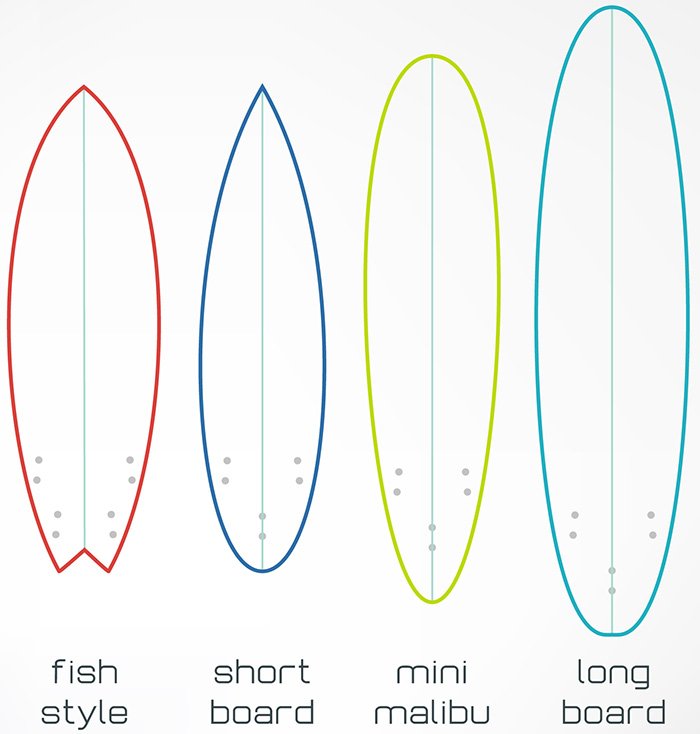
Board types and character
| Board | Character | Usual fins |
|---|---|---|
| Gun | big waves: narrow, pintail, very little frontal area, easy rail to rail | single centre fin |
| Longboard (Malibu) | wide, rounded nose, buoyancy and planing, catches waves early, no duck dive | single, 2+1 |
| Mini-malibu | wider and thicker than a shortboard, easy paddling, wide point back for radical turns | thruster |
| Egg | mini-malibu with the wide point forward: faster, less radical | thruster, 2+1 |
| Hybrid | between shortboard, fish and egg: nose fit for duck diving, fairly wide tail, wide point forward | thruster, quad |
| Shortboard | 1.5 to 2.2 m, the 1966 revolution (McTavish, Greenough): manoeuvrable without moving the feet, constant search for speed | thruster |
| Fish | wide shortboard with a swallow tail, wide point forward, low rocker, small fast waves | twin, quad |
Tail shapes
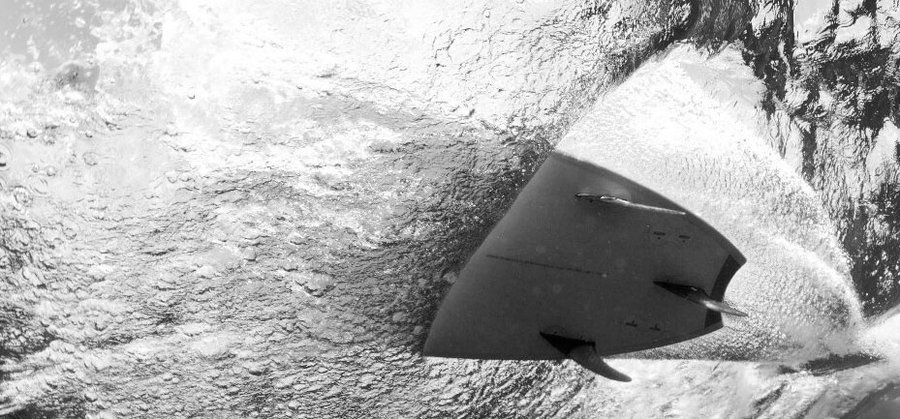
Long boards respond better with a rounded tail, easy to move from rail to rail; short boards keep an active lift zone at the back for manoeuvres under load. Square: large lift, freedom at low speed, harder rail to rail. Squash: a little narrower, a guiding groove begins to form. Diamond: between square and pintail, short rail. Swallow: wide tail and long rail, two pins that stabilise. Rounded pin: more lift than the pintail, smooth transition. Pintail: little area, guiding groove, incisive rail change, the tail of guns.

A short glossary of surf physics
- Speed
- 1 to 6 m/s in surfing, 3 m/s on average; records around 9 m/s (32 km/h). 1 m/s = 3.6 km/h.
- Acceleration
- Change of speed per second (m/s²). A 3 m fall lasts 0.78 s and lands at 7.7 m/s (28 km/h); see acceleration.
- Buoyancy
- Archimedes' thrust: 1 litre immersed = 1 kg. A rail that needs 30 litres immersed to bite needs 30 kg of pressure.
- Frontal area
- Area projected perpendicular to the motion; form drag is proportional to it, and to the square of speed (frontal area).
- Trim angle
- Angle between the bottom and the direction of motion; raising it brakes, flattening it accelerates.
- Inertia, moment of inertia
- Resistance to a change of speed or rotation; a long board is harder to start and to stop turning.
- Lift, drag
- Forces perpendicular and parallel to the flow; 70 % of a profile's lift comes from the suction on the upper surface (lift, drag).
- Angle of attack, camber, chord
- Angle between the chord and the flow; curvature of the mean line; straight line from the leading to the trailing edge (angle of attack, chord).
- Boundary layer
- Zone slowed by friction: about 30 mm at the tail of a board at 3 m/s, so the base of the fins works little and the profile acts from 20 to 30 mm off the bottom (surface friction).
Frequently asked questions
What is the difference between buoyancy and planing?
Buoyancy comes from volume (Archimedes) and carries the surfer at low speed; planing comes from the water pressure on the bottom and grows with the square of speed. The take-off marks the switch from one to the other.
What is the drive of a board?
The ability to generate acceleration with a part of the board: the rail immersed in the wave face, and the fins when their camber and angle tilt lift forward.
Long or short board: how do I choose?
The longest possible to catch the most waves in the conditions of the day, but short enough to allow the intended manoeuvres; a board too short that misses half the waves makes no sense.
Can the lift and drag of a board or a fin be calculated?
Yes. The online lift and drag calculator gives the forces on a profile from its area, speed and angle of attack, and the Heliciel software plots the complete curves of a fin, foil or keel. For a specific project, Mecaflux also offers the study of your project or training on the software.