Size pipe and fluid duct

(hydraulics air handling)

Sizing pipes fluid duct


Tutorials software fluids mecaflux


Choosing the best size of a pipe or conduit, in a hydraulic or ventilation system , is an important problem. The distribution of fluids, liquids or gases, air or water, are studied to provide the desired flow with minimal cost, of installation, maintenance and operation. Noise from turbulent fluid in the ducts is also a nuisance taken into account.

This mean that the dimensions of ducts shall be accurately studied before every things!

  • The diameter or section to consider:

The dimensions of pipes or tubes of a hydraulic system or ventilation are usually calculated based on desired flow fluid transport. The diameter of the ducts is usually the desired size. For non-circular pipes, rectangular section or oblong, are used diameters equivalent diameters iso kinetic or hydraulic diameters . This allows to calculate pressure losses , flow Or speed of fluid of non-circular ducts as if they were circular.

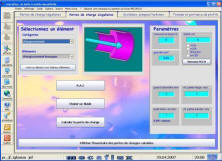
interface of choice based on the flow (integrated MECAFLUX ):

This interface allows to highlight the diameter of ideal conduct for a given flow rate. We select from the list of usual series of trade, a series we want to test, we selected the fluid temperature in the medium list ( 120 liquids and gases are already ready to be used with their data density and viscosity ).


This interface allows to highlight the diameter of ideal conduct for a given flow rate. We select from the list of usual series of trade, a series we want to test, we selected the fluid temperature in the medium list ( 120 liquids and gases are already ready to be used with their data density and viscosity )


  • Diameter influences the speed in the ducts and operating costs :

This is the determining factor. A high velocity fluid creates turbulence inside the pipe.

Such turbulence is the result of friction on the inner surface of the pipe. In short, higher is the velocity of fluid , higher is the energy consumtion and noise. To move the fluid will therefore require a pump more powerful (more expensive investment and operation)

For reduce speed (and energy consumption) without reducing flow,we must therefore increase the diameter .

Caution to some cases: too low a speed can be harmful: If the fluid is responsible for heavier particles (suction of chips, stormwater ...) A minimum speed is required to transport these particles. Otherwise they sink to the bottom and pile up. If particles sticking together, the duct diameter is thus reduced and too narrow, when the flowrate increase. Thus a minimum speed must be respect( sedimentation)

A major drawback to the diameters: THE PRICE the pipes are more expensive to purchase, transport, installation (depth of trench)

Distribution costs  Sizing of pipes and fluid ducts

Distribution costs of installing air distribution


  • The roughness , the purchase price , and the operating cost of pipes and ducts:

matter ducts plays an important role on the performance and efficiency of a network of fluid .

The roughness of the material given to the purchase evolves in time according to the transported fluid

(aggressive, oxidizing, acidic, charged with abrasive material ..) and operating conditions (constant water or with exposure time seems oxidative ..)


costs versus flow with the tool graphical analysis of network of mecaflux


The roughness of pipes and ducts is costly in energy use. the real operating price can increase tenfold over time. The operating lifetime and the evolution of roughness(operating cost) during this time , must be compared with the purchase price.

Some Examples of roughness depending on the year and operating conditions

Often this information is required and determines the dimensions of ducts.

For compressible fluids (gas or air):

The gas is compressible, it is possible to transform a volume of the same quantity of gas by compressing or changing the temperature. It becomes very difficult to speak of a quantity of gas volume without giving the pressure and temperature of gas at the time the volume was measured .. It would be difficult to give a temperature and pressure whenever there is talk of a volume of gas, temperature and pressure at the time of volume measurement is normalized to the so-called normal conditions. This is called normal volume (m3) and normal flow (Nm3 / h) Learn more about normal m3 .

Beware, there are two standards and therefore the possibilities of errors in conversions:

pressure identical 1013 millibars (average atmospheric pressure) for 2 standards

DIN 1343: a temperature of 273.15K (0 ° C)
ISO 2533: a temperature of 288.15K (15 ° C)

Learn more about normal m3

For calculations of losses,flow volumes of gas (compressed or not) moved into the ducts shall be given in cubic meters (m3).

To summarize:

The maximum speed fluid in a pipe is determined by the pressure drop it causes. This drop "eligible" for the duct is not noisy or does not generate additional costs of operation (energy pumping) should remain below 20 mm / m pressure drop coefficient.

The minimum speed fluid in a pipe is often determined by the velocity of sedimentation of particles suspended in fluid. The minimum speed is determined by the price of pipes and installation. Indeed a slow speed leads to low operating costs and pumping but the large diameter pipe are expensive to purchase and installation. It is believed that a practical pressure drop per unit length of 15 mm / m is a good compromise between duct diameter and energy expenditure.

To find the right compromise between the purchase price, installation, installing, operating, pumping, roughness and stock trade , Interface design assistance Ventilation ducts or water is incorporated into MECAFLUX.

 This interface allows to highlight the diameter of ideal conduct for a given flow rate. We select from the list of usual series of trade, a series we want to test, we selected the fluid temperature in the medium list ( 120 liquids and gases are already ready to be used with their data density and viscosity )

The interface of ducts scans a selected list , and computes the most relevant choice in saving energy and installation costs from the pressure losses caused versus the imposed flow. The diagnosis is just illustrative, and the choice depend of strategy(depreciation or expected operating life). The interesting point is the evolution of the pressure drop depending on the diameter.

See also:


graphical analysis of network

Duct smoke


copyright © MECAFLUX  

 mis à jour le 10 /2009


audience